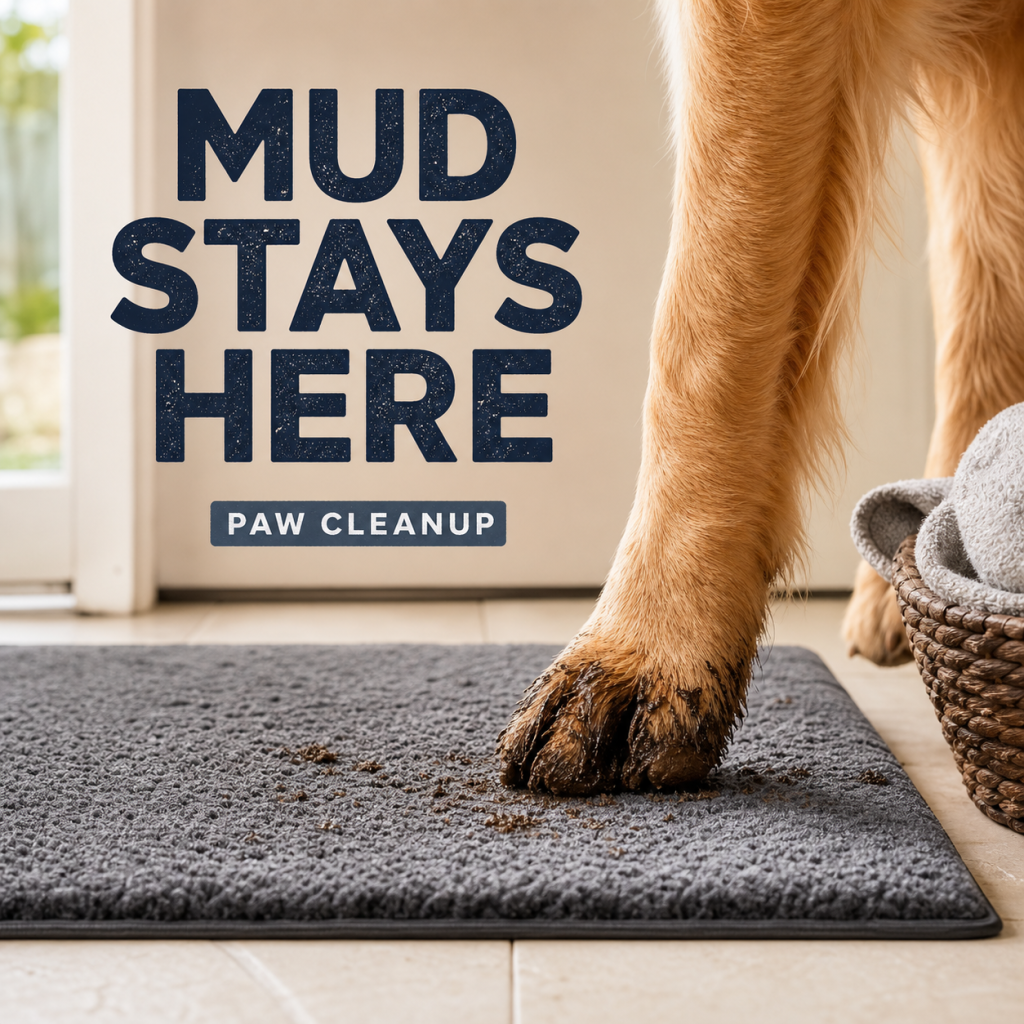

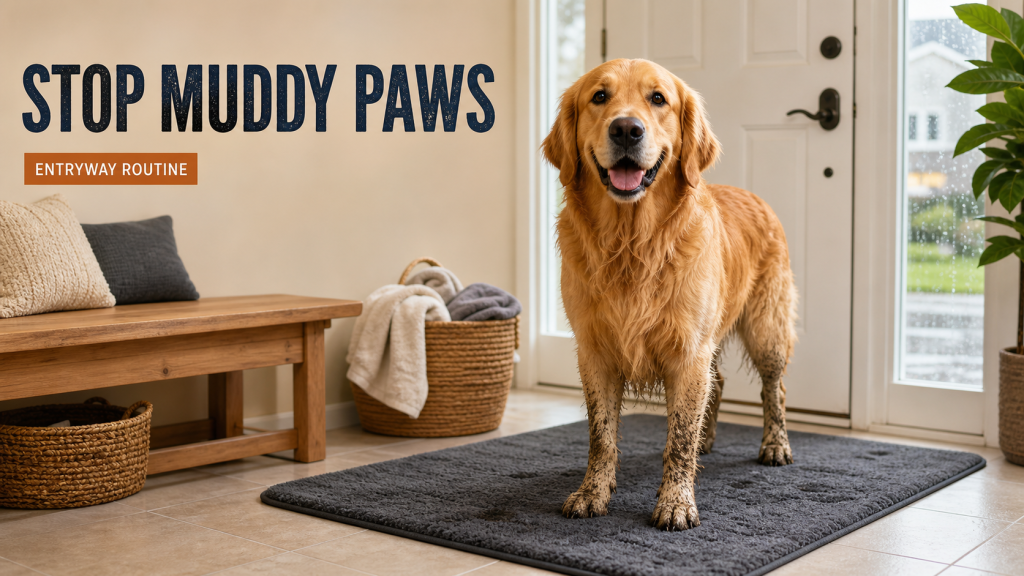
Quick answer: The easiest way to reduce muddy paw prints is to make a three-step stop between the door and the rest of the house: catch loose dirt, wipe moisture, and give your dog a short pause on a washable surface. You do not need a complicated mudroom. A mat, a dedicated towel, and a small supply basket can work in an apartment entryway just as well as in a larger home.
This is a research-based routine, not a claim that one product will keep every floor spotless. Paw size, coat length, weather, flooring, and how excited your dog is after a walk all matter. The goal is to stop most of the mess at the door so cleanup stays manageable on an ordinary weekday.
This guide shows how to stop muddy dog paws from tracking through the house with a simple entryway routine.
Last reviewed: July 14, 2026.
Why muddy paws keep getting past the door
Most entryways fail because the dog moves straight from wet ground to a dry indoor floor. A thin decorative rug may look good, but it often does not give you enough surface area to catch grit or enough time to wipe paws. The supplies may also be stored in a closet, which turns a 30-second task into a small project.
Build the routine around the path your dog already takes. Open the door, step onto a surface that can handle moisture, and keep the towel where you can reach it without leaving your dog unattended. If the routine feels easy when you are carrying keys, a leash, and a grocery bag, it is much more likely to last.
The three-part entryway setup
Give dirt a place to land
Start with a low-profile, washable mat inside the door. It should be large enough for your dog to stand on with all four paws, yet thin enough that the door opens freely. Measure the available floor area with the door fully open before ordering anything.
For a small apartment, a mat around 24 by 36 inches may be a practical starting footprint, but the right size depends on the doorway and dog. Look for clear wash instructions and a backing that stays reasonably flat on your type of flooring. A mat that bunches, curls, or slides is inconvenient and can become a trip hazard.
An outdoor mat can also help catch larger debris before your dog comes inside. Keep the roles simple: outdoor surface for loose dirt, indoor washable surface for moisture and the paw-wiping step.
Keep one dedicated towel within reach
Use a towel only for paws and lower legs. A hand towel works for many small and medium dogs; a larger absorbent towel may be easier for a bigger dog or a heavy rain day. Keep a second clean towel in the same basket so you are not forced to reuse a soaked one.
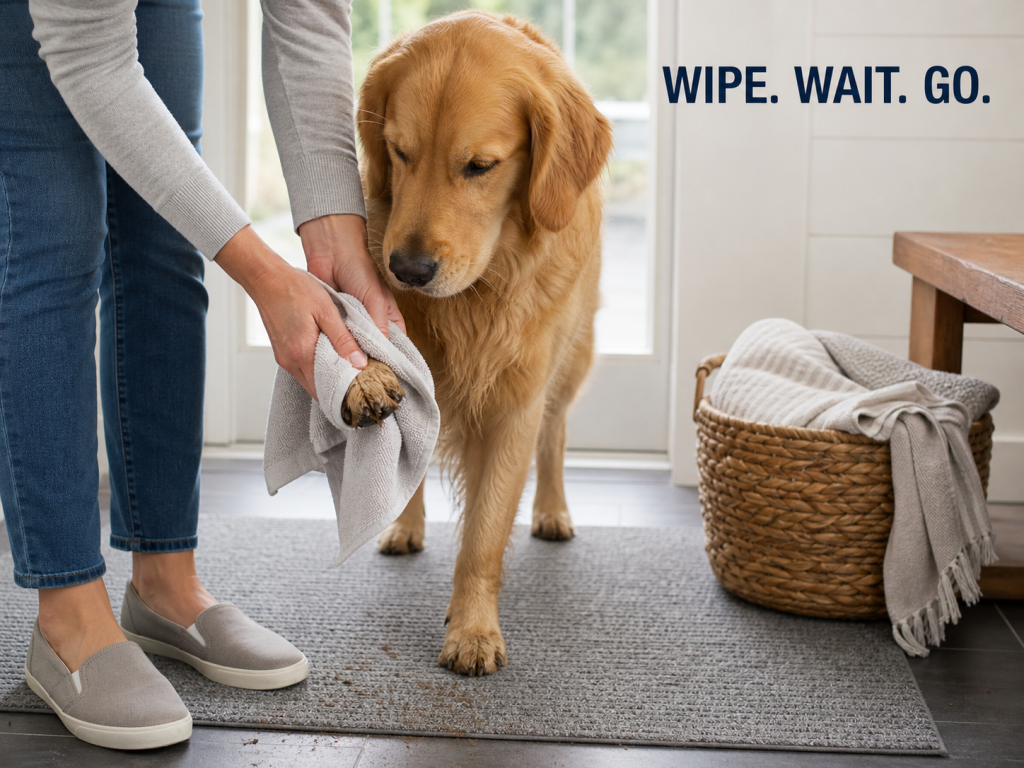
Gently hold one paw at a time, wipe between the pads if needed, and dry the lower leg where mud often splashes. There is no need to turn every walk into a grooming session. Focus on visible moisture and debris, then wash the towels regularly according to their care label.
If your dog dislikes paw handling, make the routine brief and predictable. Use a calm cue and normal praise, and stop before either of you gets frustrated. Persistent pain, limping, or sudden sensitivity to paw handling is not a cleaning problem; contact a veterinarian.
Add a short “wait” spot
Ask your dog to pause on the mat for a few seconds while you take off the leash and check the paws. This small pause prevents the familiar sprint to the couch before you are ready. A washable runner, a bench-side mat, or a defined square of entryway flooring can become the same cue every day.
The wait spot does not need to be a perfect obedience exercise. It is simply a predictable place where the dog learns that outdoor gear comes off and paws get checked before indoor time begins.
A rainy-day routine you can finish in under two minutes
- Before leaving, place the towel and a dry mat by the door.
- On the way back, let your dog step on the outdoor surface or pause just outside for a moment if that is safe and practical.
- Bring your dog directly to the indoor mat; avoid walking across the room to find supplies.
- Wipe each paw and the lower legs that picked up splashes.
- Use the second towel if the first is saturated.
- Hang the used towel where it can dry, then shake out or rinse the mat when the weather settles.
This routine is intentionally short. On a truly muddy day, you may still need to sweep or mop later. The difference is that you are cleaning one small entry zone rather than following paw marks through several rooms.
Choose tools for your home, not for a product photo
Before buying a washable doormat, paw-cleaning cup, boot tray, or storage bench, answer these questions:
| Question | Why it matters |
| Can the door clear the mat? | A thick mat may block the door or curl at the edge. |
| Will it fit in your washer? | “Washable” is useful only if the care process fits your home. |
| Is there room for the dog to turn around? | A narrow landing zone makes paw cleaning harder. |
| Where will wet towels dry? | A practical hook or hamper prevents musty piles. |
| What surface are you protecting? | Hardwood, tile, carpet, and rental flooring have different cleanup needs. |
Start with the smallest change that solves the most repeated mess. In many homes, that is a better mat plus two towels—not a cabinet full of gadgets. Add a dedicated paw cleaner only if your dog tolerates it and it makes your actual routine faster.
Common mistakes that make the mess worse
Buying a mat without measuring
The prettiest mat is not helpful if it blocks the door, leaves no room for the dog, or cannot fit in the laundry routine. Measure first and keep the receipt until you know the setup works.
Keeping supplies in another room
If your towel is upstairs or your cleaning spray is under the kitchen sink, paw wiping becomes optional when you are tired. Store the minimum tools exactly where the mess begins.
Trying to clean the whole dog after every walk
Overcomplicated routines usually disappear after a few days. Save a full rinse or bath for when it is genuinely needed. For normal wet weather, focus on paws, lower legs, and the entryway.
Ignoring the dog’s comfort
Do not force a frightened dog into a tight cleaning device or slippery space. Choose a non-slip surface, keep your handling gentle, and build the pause gradually. A setup that respects your dog’s comfort is more sustainable for everyone.
Small-space and renter-friendly versions
In a narrow apartment entry, use a slim mat, wall hook, and shallow basket rather than a large bench. A removable tray can hold shoes and damp gear without adding permanent fixtures. If your front door opens directly into the living room, make the first two feet of floor the cleanup zone and place the towel basket beside—not across from—the door.
For rental homes, avoid assuming you can mount shelves or alter the flooring. Freestanding storage, washable textiles, and removable hooks are often enough. Keep a small handheld vacuum or broom nearby only if you have space to store it safely; otherwise, a quick sweep after the towel routine may be simpler.
When the car is part of the problem
If muddy walks start at a trailhead or dog park, keep a spare towel and a washable layer in the car. Clean paws before your dog climbs onto the seats when possible. This reduces both car mess and the amount of wet debris you bring home.
FAQ
What is the best way to clean muddy dog paws?
For everyday mud, a calm pause on a washable mat plus a dedicated towel is often the simplest approach. The best setup is the one that fits your door, flooring, dog, and laundry routine well enough to use after every wet walk.
Do I need a paw-cleaning cup?
Not necessarily. Some dogs and households find one convenient; others prefer a towel because it is quicker and easier to store. Consider one only if you have tried the basic mat-and-towel routine and still need more help with packed-on dirt.
How do I stop my dog from running inside with muddy paws?
Create the same stopping point every time: mat, short wait, paw wipe, then release. Keeping the supplies at the door makes it easier to reinforce that sequence consistently.
Bottom line
You do not need a custom mudroom to reduce muddy paw prints. Put a washable surface, a towel, and a short pause directly in your dog’s path. Once that small routine feels automatic, you can decide whether a larger mat, storage upgrade, or car-cleanup tool would genuinely make life easier.
Keep building your routine
If you are setting up your first pet-home cleanup system, start with our Start Here guide. You can also explore more practical entryway and travel routines in Mud & Travel Cleanup.